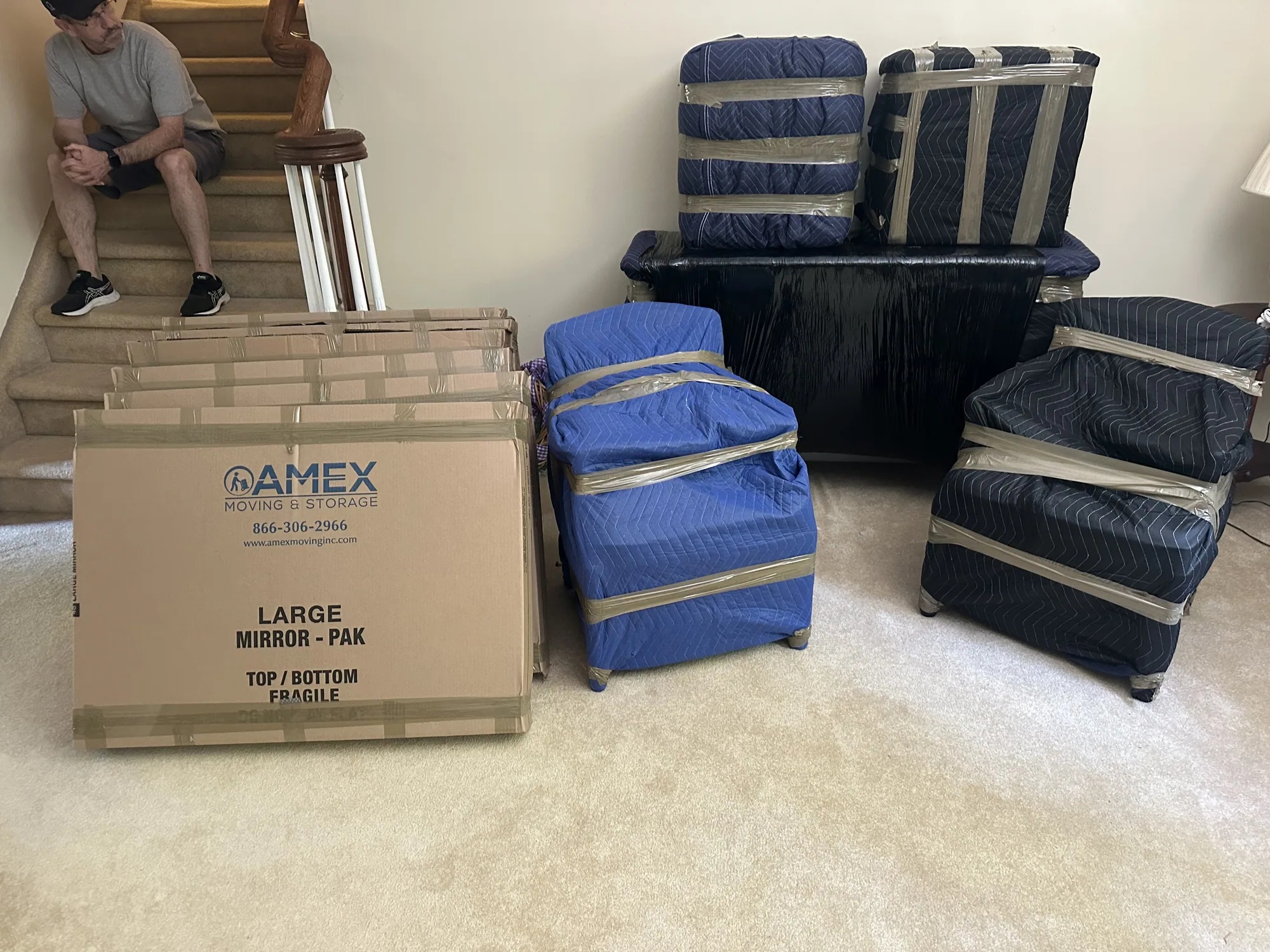



By AMEX Moving & Storage · Published · 7 min read
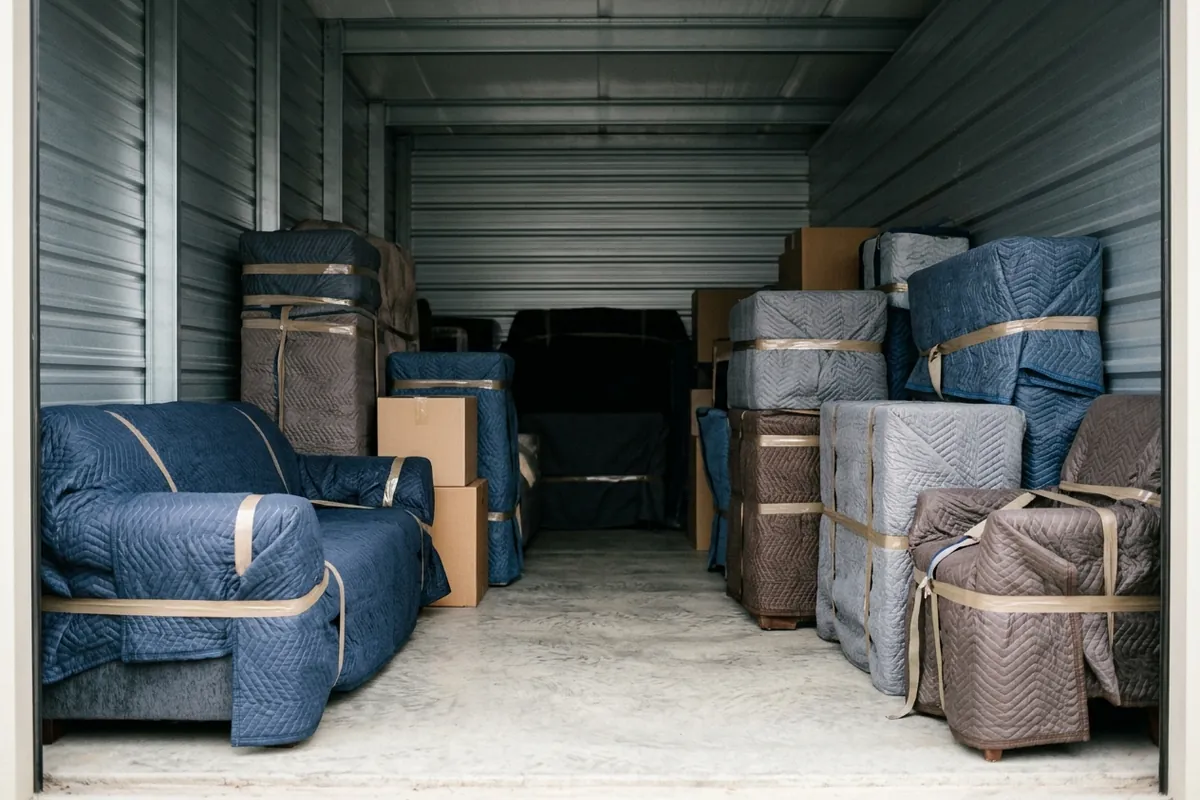
Knowing how to store furniture in a storage unit comes down to three things: clean and dry pieces, breathable wrapping, and a layout that leaves room to walk. Get those right and furniture can sit for months without picking up dents, mildew or a musty smell.
This guide walks through prep, wrapping, loading, climate control, what to keep out of the unit and how to check on your belongings once the door is locked.
Prep every piece before it goes in
Storage problems usually start at home. Dust and food residue can damage furniture over time, and anything damp will grow mildew in a closed unit. Public Storage makes the rule simple: damp furniture never goes into a unit.
- Clean each piece for its material: a finish-appropriate cleaner on wood, a thorough vacuum on upholstery, conditioner on leather, and a wipe on metal.
- Let everything dry completely, even if that means a fan and a day of waiting.
- Take apart what is meant to come apart, such as table legs, bed frames, headboards and shelving. Do not force pieces that show no screws or bolts.
- Photograph complicated furniture before you disassemble it so reassembly is easy.
- Put screws and small parts in a labeled bag, then keep that bag in a box rather than taping it to the piece, since a taped bag can damage the piece or fall off on the way.
How to wrap furniture for storage
The goal is padding against scratches and a cover that lets the piece breathe. Plastic is fine for the ride to the unit, but wrapping furniture tightly in plastic for long-term storage traps moisture and can lead to mold. Use U-Haul and Public Storage as your guide for each material.
| Piece | How to wrap it | Avoid |
|---|---|---|
| Wood dressers, tables, desks | Moving blankets, taped to themselves instead of the wood | Plastic wrap against the finish |
| Sofas and chairs | Remove cushions and wrap them separately; cover the frame with a breathable cover or blankets | Sealing the whole piece in plastic |
| Mattresses | Clean, vacuum, dry, then slide in a mattress bag | Leaning one against a wall |
| Glass tops and mirrors | Several layers of bubble cushion plus a blanket, kept flat; a tape X on mirror glass | Stacking weight on top |
| Table legs and small parts | Wrap each leg in a blanket and keep hardware in a labeled box | Taping hardware bags to the piece |
Mirrors and large art are the hardest items to store safely. If you have pieces you cannot replace, packing and crating in custom wooden crates is worth considering before they go into any unit.
How to store furniture in a storage unit: aisle first, heavy at the bottom
Treat the unit like a small room. These storage unit packing tips make everything easier to reach, protect what is underneath, and let you take out one item without unloading the whole space.
- Plan the layout. Put big, tall furniture against the back and the sides, with shorter pieces nearer the door.
- Leave a central aisle so you can walk to the back. Do not overpack.
- Load heavy boxes and solid pieces on the bottom and fragile items on top. Never put heavy items on upholstery, mattresses or delicate wood.
- Label box sides that face the aisle, and keep a numbered inventory or box map.
- Keep what you may need soon near the entrance.
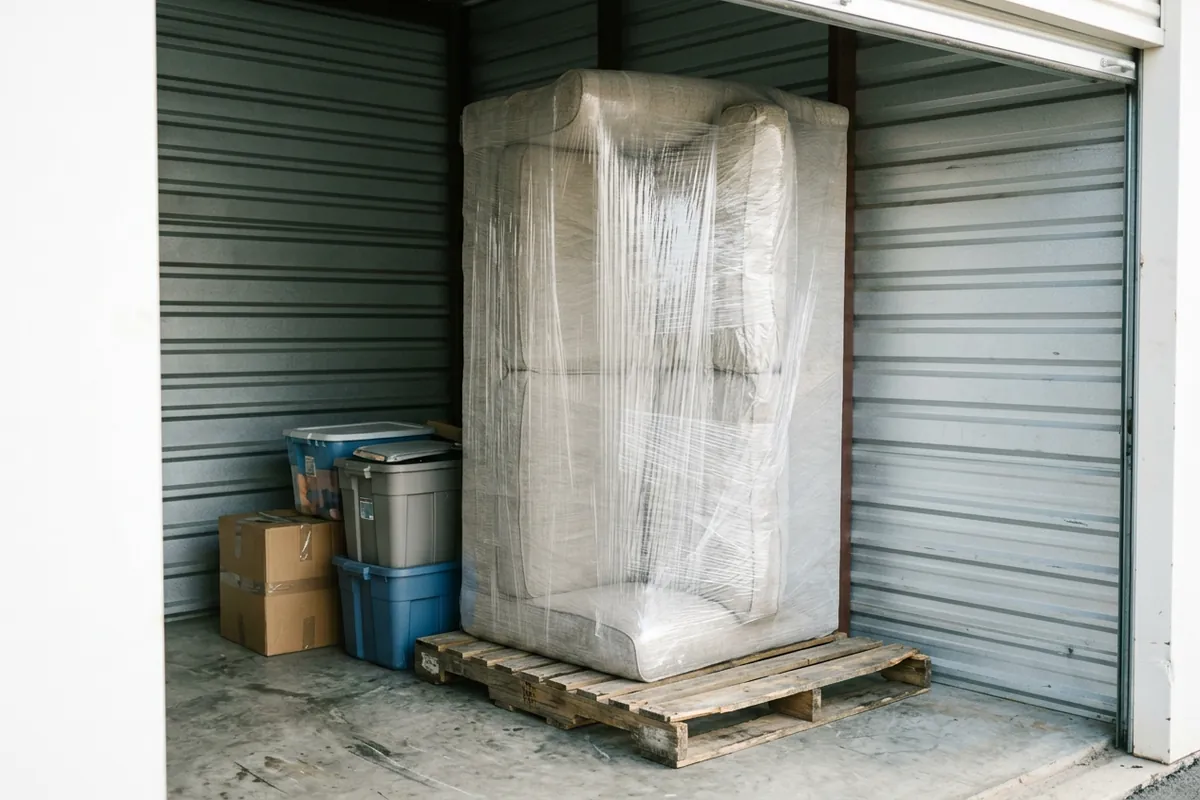
Keep furniture off the floor and out of the damp.
Raising furniture off the floor helps with moisture and dirt, especially in flood-prone areas, but pallets are only allowed at some facilities, so ask before you bring them. Standing a sofa on its end saves floor space, but Public Storage says not to do it automatically, because some manufacturers want a sofa kept in its normal position. If you stand one up, make sure it cannot tip and that no delicate part is bearing weight.
Sofas, beds and dining sets: piece-by-piece notes
Bulky pieces behave differently from boxes, so give them a little extra attention. Public Storage recommends removing legs and other removable parts from a sofa, separating sectionals into their sections, and keeping heavy boxes off the cushions, which can warp pillows and stretch springs. Store the cushions separately and flat if you can, with nothing heavy on them.
- Dining tables: remove the legs, wrap each one in a blanket, and wrap the tabletop on its own.
- Dining chairs: pad them between stacks, and keep each stack stable so it cannot slide.
- Bed frames and headboards: separate them, wrap the rails and keep the hardware in one labeled bag.
- Bookcases and shelving: take apart the ones that come apart, and keep the hardware in a labeled box.
Climate controlled storage: which furniture needs it
Climate controlled storage keeps temperature or humidity more consistent than a standard unit, though facilities do not guarantee specific ranges, so confirm what a particular site offers. U-Haul says couches suffer in high humidity or extreme heat, and that cotton, wood and leather generally belong in a climate-controlled unit.
- Public Storage points to wood, leather, certain upholstery and furniture with delicate finishes as the pieces to consider it for.
- U-Haul adds cotton to the list and says a full living room set calls for it.
- Your decision depends on three things: the value of the furniture, how long it will be stored, and your local climate.
If you are moving long distance and your new home is not ready, storage can bridge the gap. Every long-distance move with AMEX Moving and Storage includes 30 days of free climate-controlled storage, longer stays are available, and your belongings are delivered to your door when you are ready. Read more on our storage services page or the long-distance moving overview.
What not to put in a storage unit
Rules vary by company, so your rental agreement is the final word. Public Storage lists the usual no-go items, which are worth checking before you load.
- Food and perishables, which cause odors and attract pests.
- Wet or odor-producing items. Clean and dry everything first.
- Hazardous materials, including flammables, explosives and anything that gives off fumes.
- Plants and animals.
- Illegal items, important documents and high-value items such as cash or jewelry.
- Vehicles that do not run or are not properly documented.
Storing furniture long term: check in on it
Storing furniture long term works best with an occasional visit. Public Storage suggests checking periodically for moisture, pests, dust and anything that has shifted or fallen, and after several months asking whether the ongoing cost is still worth it. A periodic inspection catches a leak or musty smell before it spreads.
For other planning help, see our guides to how long a long-distance move takes and what affects the cost of a long-distance move. Once you know how to store furniture in a storage unit, the next question is the move itself. When you are ready to plan your own move and storage, ask for a free quote and a moving agent will work out the details with you.