


By AMEX Moving & Storage · Published · 7 min read
Most broken dishes break for the same three reasons: they were packed flat, packed loose, or packed in a box that could not carry the weight. Once you know how to pack dishes for moving, each of those problems has a simple fix, and you do not need special skills or a big budget.
This guide covers the supplies worth buying, a bottom-up way to build each box, and the right method for plates, bowls, mugs and glasses. It ends with what to do about heirloom pieces you cannot replace.
How to pack dishes for moving: the supplies that matter
Dishes are heavy and brittle at the same time, so the box matters as much as the wrapping. Gather everything before you wrap the first plate, because stopping halfway to hunt for tape is when corners get cut.
- Sturdy double-walled boxes, or dish pack boxes with cell dividers for glassware. Choose a smaller box for heavy dishware so you can still lift it.
- Plain, unprinted packing paper for dishes. Newsprint ink can stain dishes, so keep newspaper for filling gaps only and never let it touch the dish.
- Bubble wrap for fine china and thin glass, used over a layer of paper rather than instead of it.
- Packing tape and a marker, plus a cleared table or counter to use as a wrapping station.
- A stack of extra paper to crumple. You will use more than you expect.
Build each box from the bottom up
- Tape the bottom seam, then run two or three strips across it. A dish box that gives way underneath is the classic failure.
- Line the floor with a thick bed of crumpled paper or bubble wrap so the first layer has something soft to land on.
- Load the heaviest pieces first. Serving platters, dinner plates and casserole dishes belong on the bottom.
- Add lighter layers on top, with crumpled paper between layers and along the walls.
- Press gently on the top layer before closing. Anything that shifts needs more paper. Finish with a flat layer of crumpled paper so the lid rests on cushioning, not china.
Packing plates for a move: on edge, one at a time
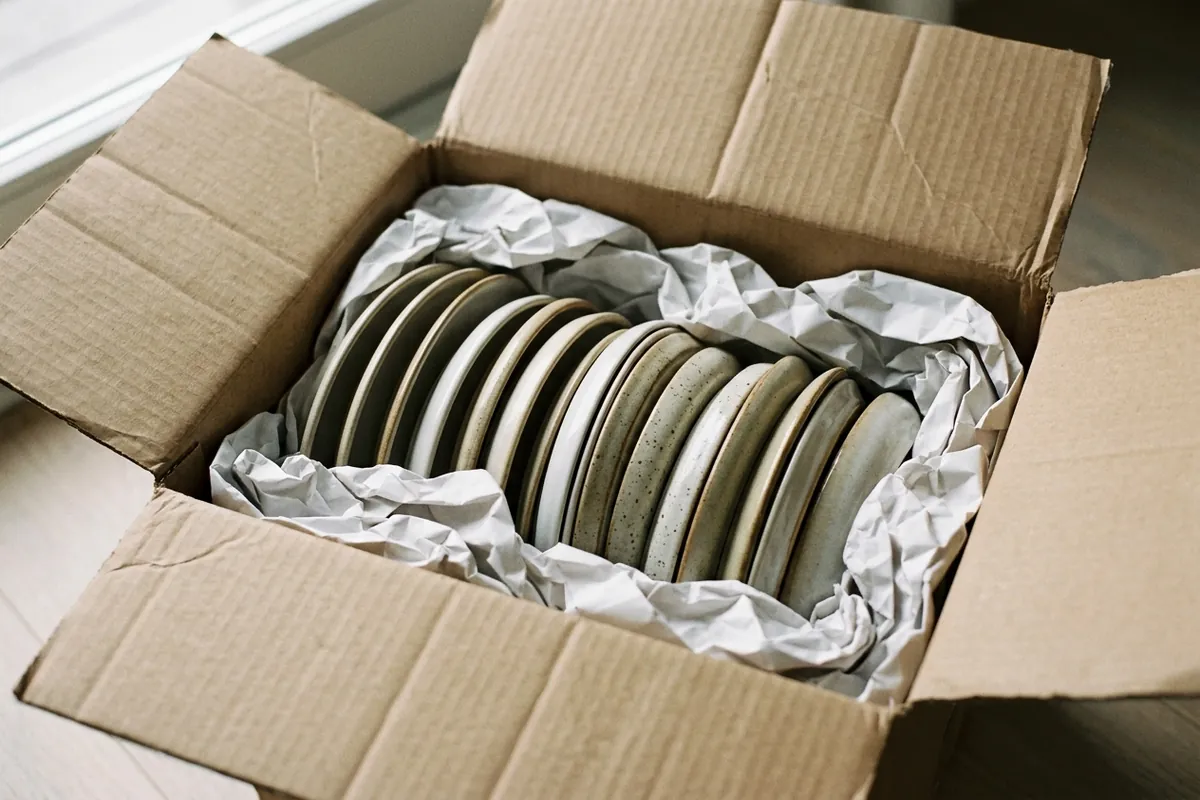
Plates survive best the way records do, standing on edge. A flat stack puts the weight of the whole pile on the bottom plate, and one hard bump can crack it.
- Lay two or three sheets of packing paper flat and center one plate on them.
- Fold the corners over the plate, then tuck the loose ends in.
- Group three or four wrapped plates into a bundle and wrap the bundle once more, which keeps them from shifting against each other.
- Stand each bundle on its edge in the box, snug against the next, with crumpled paper between rows.
- If you must stack, keep it short. One packing guide from Updater suggests no more than five heavy china plates at a time and up to six small plates or saucers.
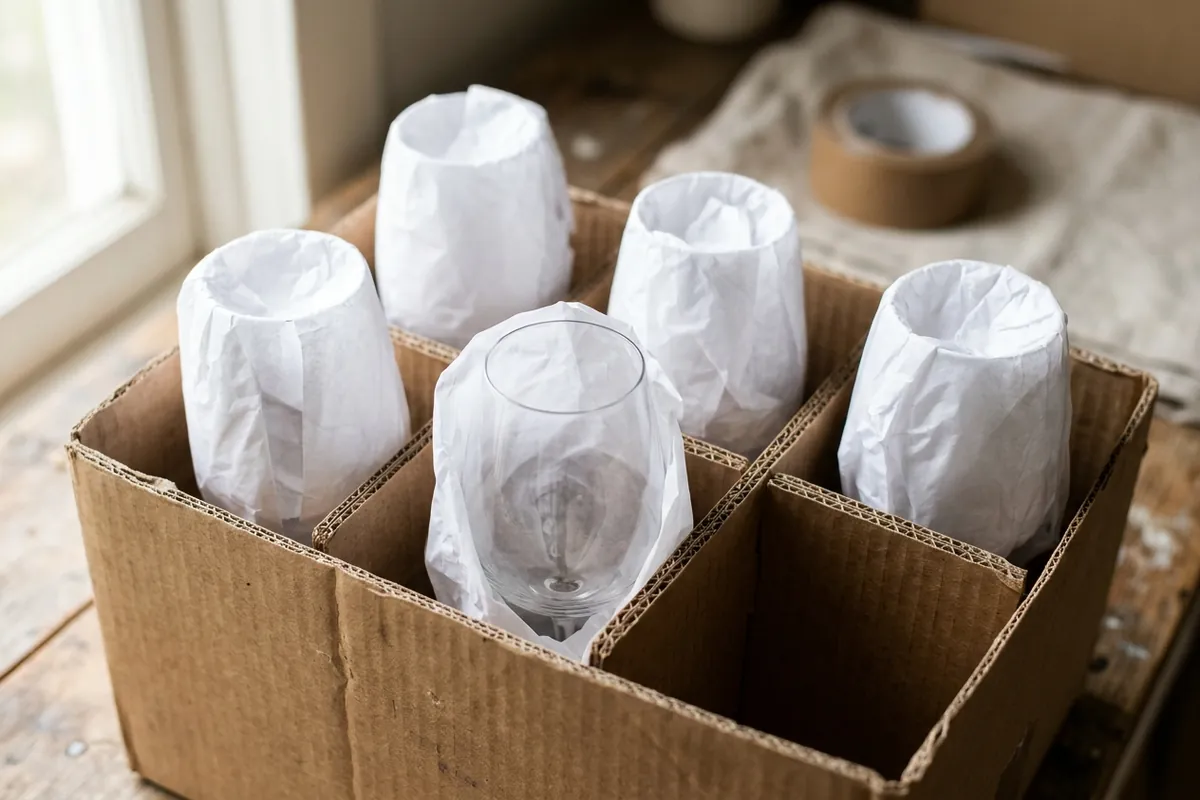
Dividers and paper keep glasses from touching.
Bowls, mugs and serving pieces
Advice on nesting varies. This Old House suggests wrapping dinnerware bowls the way you wrap plates and setting them on their sides rather than nested. Plastic and metal mixing bowls are different, because you can nest them and wrap the stack as a group.
| Piece | How to wrap it | How it sits in the box |
|---|---|---|
| Dinner plates | Each plate in two or three sheets, then bundles of three or four | On edge, in the bottom layer |
| Salad plates and saucers | Same method, in smaller bundles | On edge, above the dinner plates |
| Dinnerware bowls | Wrapped one at a time, like plates | On their sides, not nested |
| Plastic and metal mixing bowls | Nested, then wrapped as a group | Middle layer, padded all around |
| Mugs and cups | Each one wrapped, with a loose sheet of paper inside | Upright in rows, paper between layers |
| Casserole and baking dishes | Wrapped one at a time, paper between any stacked pieces | Bottom of the box, heaviest first |
How to pack glasses for moving without chipped rims
Tumblers and juice glasses take more abuse than stemware, but rims chip when they knock together. Wrap each glass on its own and keep it upright. A common method is to stuff one crumpled sheet inside the glass, lay the glass on a large sheet at a diagonal, then roll and tuck the edges as you go.
If you are wondering how to pack wine glasses, the stem is the weak point. Crumple paper into the bowl, lay two or three sheets flat, set the glass on its side at one corner, roll it across and fold the extra paper around the stem and bowl, the method This Old House walks through. Then seat it in a divided cell or a box with dividers or dish sleeves.
Put lighter glassware on top of heavier items, never underneath, and fill every open pocket with crumpled paper so nothing can slide when the lid closes.
Tape, label and test the lift
- Seal the box with tape along the center seam and both edges, the H pattern that Public Storage and other packers favor for heavy boxes.
- Write the contents and destination room on every side and the top, mark the box fragile, and add this side up arrows.
- Number each box and keep a master list, so at delivery you can tell whether Dish Box 3 made it.
- Lift the box before you stack it. If it strains you, split it in two. Professional movers generally keep dish boxes under about 60 pounds, but when you are the one carrying it, aim lower.
Heirloom china, crystal and pieces you cannot replace
For everyday dishes, careful DIY packing works well. For a wedding set, your grandmother's crystal or anything with sentimental value, consider handing that job over. AMEX Moving & Storage offers full, fragile-only and DIY packing plans, so a crew can wrap the pieces that worry you while you pack the sturdy items yourself. Custom wooden crates are available for mirrors and art, and packing materials are stocked on every truck.
Now that you know how to pack dishes for moving, zoom out to the rest of the house. Our moving tips and the cross-country moving guide cover the bigger picture, and the moving checklist keeps the dates straight. Questions about materials or plans are answered in our FAQ. When you are ready to compare options, request a free quote and ask your agent which packing plan fits your kitchen.